
15 Red Flags: The Ultimate Checklist for Identifying Signs of a Bad Personal Trainer

Have you ever finished a session feeling more confused than when you started, wondering if your investment is actually moving the needle on your fitness goals? It's a common frustration for busy professionals who value efficiency. You turn up, put in the work, and pay for expertise, yet the results don't seem to follow the effort. Identifying the signs of a bad personal trainer is the first step toward reclaiming your time. Feeling ignored or intimidated on the gym floor isn't part of the deal, and inconsistent technical advice only adds to the friction of a demanding lifestyle.
This guide will help you spot the subtle and obvious markers of poor coaching so you can invest your energy into a specialist who delivers actual progression. We'll provide a clear framework to evaluate coaching quality, giving you the confidence to seek a training environment that prioritises your long-term physical wellness over a coach's ego. By the end, you'll know how to find a supportive community that backs your professional performance and respects your dedication.
Medical Disclaimer: This content is for informational purposes only and does not constitute professional medical advice. Always consult with a doctor or qualified health professional before beginning a new exercise programme or making significant changes to your physical activity.
Table of Contents
The Professionalism Red Flags: Beyond Being Late
Professionalism in the fitness industry is often reduced to a simple binary: did the coach show up on time? Whilst punctuality is essential, it's merely the bare minimum. True qualified personal trainers understand that their professional duty extends to every second of the hour you've paid for. One of the most obvious signs of a bad personal trainer is the "Phone-First" mentality. If your coach is scrolling through social media or replying to texts whilst you're mid-set, they aren't just being rude; they're compromising your safety and stalling your results.
A high-performance environment requires an organised and disciplined space. If a trainer leaves weights scattered or fails to maintain a clean training area, it often reflects a lack of care in their programming too. Professionalism also manifests in how they communicate outside the gym. Consistency is key for busy professionals. If they're slow to respond to queries about your training or nutrition, they're likely not as invested in your long-term progression as they claim to be.
The Distraction Test: Is Their Attention on You?
It's easy to spot a trainer who treats the gym floor like a social club. If they spend more time chatting to other staff members than watching your squat depth, you're paying for their social life, not their expertise. Your coach should be actively recording your data, tracking your lifts, and providing verbal cues. If they're more interested in filming content for their own Instagram than correcting your form, their priorities are misplaced. Expert coaching requires constant adjustment and physical corrections to ensure you're moving efficiently and safely. Without this focus, you're just paying for a glorified cheerleader.
Administrative Integrity and Boundaries
The way a coach handles the business side of their practice says a lot about their reliability. Common signs of a bad personal trainer include ghosting you when you try to reschedule or sending unprofessional, late-night messages that blur the lines of the professional relationship. Clear boundaries are a sign of respect for your time. If they can't manage a simple calendar or have an inconsistent cancellation policy, it's a strong indicator that their technical coaching will be just as haphazard. At Arete Gyms, we believe that structure and accountability are the foundations of any successful transformation. Professionalism isn't an optional extra; it's the framework that allows for sustainable growth.
Medical Disclaimer: This content is for informational purposes only and does not constitute professional medical advice. Always consult with a doctor or qualified health professional before making decisions about your fitness or health.
The Technical Checklist: Signs of Poor Programming
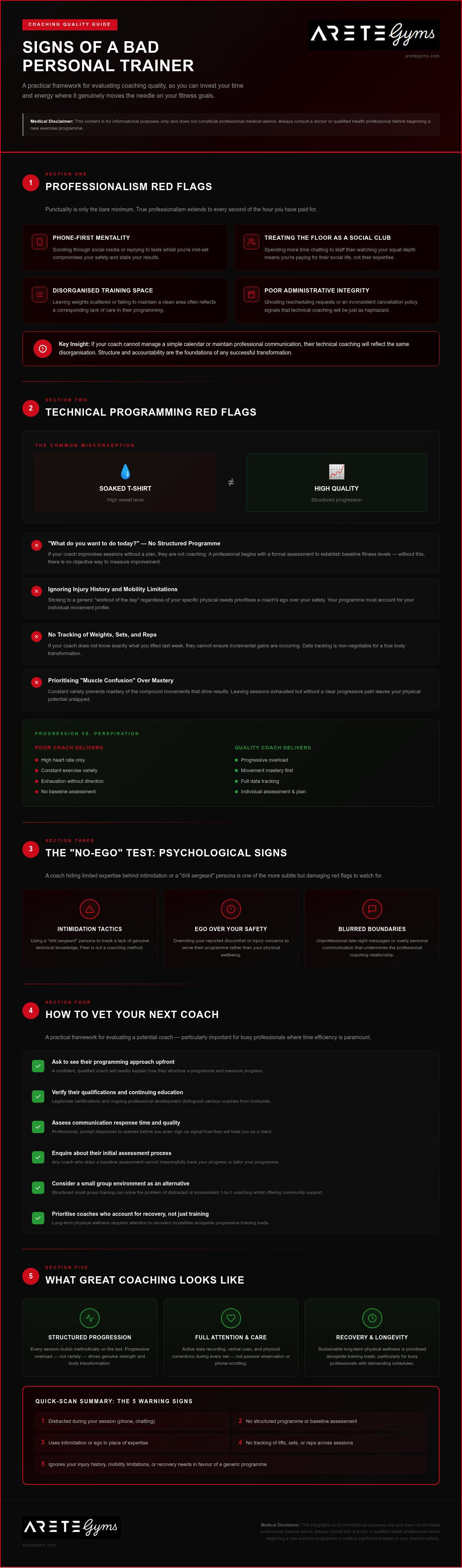
Many people mistake a high heart rate and a soaked t-shirt for a high-quality session. However, one of the most critical signs of a bad personal trainer is the lack of a structured, long-term programme. If your coach arrives at the gym and asks, "What do you want to do today?", they aren't coaching; they're improvising. A professional starts with a formal assessment to establish your current fitness levels. Without baseline testing, there's no objective way to measure your improvement over time.
A coach should also be deeply familiar with your injury history and mobility limitations. Ignoring your specific physical needs to stick to a generic "workout of the day" is one of the clearest signs of a bad personal trainer who prioritises their own ego over your safety. They must also track every weight, set, and rep across your sessions. If they don't know exactly what you lifted last week, they can't ensure you're making the incremental gains needed for a true body transformation.
Progression vs. Perspiration
Progressive overload is the foundation of any successful body transformation. It involves gradually increasing the stress placed on the body during exercise to force adaptation. A bad trainer often prioritises "muscle confusion" or constant variety, which prevents you from mastering specific movements. If you're always doing something different, you're never actually getting better at the exercises that drive results. You might leave the session exhausted, but without a clear path toward lifting heavier or moving better, your physical potential remains untapped.
Movement Mechanics and Safety
Biomechanics is the science of how your body moves. Amateur trainers often force clients into positions their anatomy doesn't support, such as demanding a deep squat when ankle mobility is restricted. This is often where the dangerous "no pain, no gain" myth takes hold. Genuine physical red flags, like sharp joint pain, should never be ignored. A specialist coach will always have "regressions" ready. If an exercise is too difficult or causes discomfort, they should immediately offer a safer, effective alternative that still targets the intended muscle groups. If you're looking for a structured environment that prioritises your safety, book a session with our specialist team.
Medical Disclaimer: This content is for informational purposes only and does not constitute professional medical advice. Always consult with a doctor or qualified health professional before starting a new exercise programme or making significant changes to your physical activity.
The "No-Ego" Test: Psychological Signs of a Bad Coach
The relationship between a coach and a client is built on trust, but it's often undermined by a trainer's need to be the centre of attention. Many people mistake an aggressive "drill sergeant" persona for high-performance motivation. In reality, constant shouting and manufactured intensity are often masks for a lack of technical knowledge. If a coach can't explain the physiology behind a movement, they might rely on volume to distract you from their poor programming. The gym should be a sanctuary from the high-stakes environment of the boardroom, not an extension of it. One of the key signs of a bad personal trainer is the creation of a culture of intimidation rather than one of inclusive encouragement.
Watch out for trainers who make every session about their own physique or past achievements. If your coach spends more time discussing their personal "PB" (personal best) or admiring their own reflection than observing your form, your progress is being sidelined. A true specialist remains grounded and results-oriented. They have the professional confidence to say "I don't know" when asked a complex technical question, rather than inventing an answer to protect their image. This transparency is a hallmark of a "no-ego" philosophy, ensuring that your safety and long-term health always come first.
Authoritative Expertise vs. Ego
A great coach aims to empower you with knowledge, whilst a bad one tries to keep you dependent on them. If your trainer avoids explaining the "why" behind your programme, they're likely trying to maintain an unnecessary air of mystery. Expert coaching should provide you with the tools to understand your own body and movement patterns. You've likely encountered the red flag of a trainer who belittles your effort or makes you feel inadequate for not reaching a certain milestone. This behaviour is counterproductive. For busy professionals, fitness must be a sustainable part of a demanding lifestyle. You need a mentor who respects your time and backs your potential without the need for vanity-driven power plays.
Communication Style and Inclusive Language
Identifying the "Gym Bro" vocabulary that excludes or confuses beginners is essential when vetting a coach. Using overly technical jargon or niche slang without explanation is another one of the signs of a bad personal trainer. It creates a barrier to entry that can make even the most successful professional feel like an outsider. A specialist coach adapts their communication style to fit your personality and learning pace. At Arete Gyms, we prioritise a supportive community spirit where the focus is on the work and the people, not the ego. We believe that a disciplined yet approachable hand is far more effective for long-term physical progression than an intimidating drill-sergeant attitude.
Medical Disclaimer: This content is for informational purposes only and does not constitute professional medical advice. Always consult with a doctor or qualified health professional before beginning a new exercise programme or making significant changes to your physical activity.
How to Vet Your Next Coach: A Practical Framework
Once you understand the signs of a bad personal trainer, you need a methodical way to filter for excellence. Don't simply sign up for a block of sessions based on a friendly chat or a social media profile. Start by observing the trainer in their natural environment. Are they engaged with their current clients, or are they leaning against a machine whilst staring at their phone? A specialist coach will be actively managing the floor, providing cues, and recording data. If they seem more interested in the gym's social scene than their client's squat form, they've already failed the first test.
Check for specialist qualifications that go beyond a generic Level 3 certificate. Whilst Level 3 is the entry-level industry baseline, look for coaches who have invested in advanced strength and conditioning or biomechanics. This extra layer of expertise is what separates a "rep counter" from a genuine mentor who can navigate complex movement patterns and injury histories. A trial session is your best opportunity to see this in action. Use those 60 minutes to evaluate if the coach is truly listening to your needs or simply running you through a pre-packaged routine.
Essential Questions for Potential Trainers
Before committing your time and energy, conduct a brief interview. The quality of their answers will reveal their professional depth and whether they possess the signs of a bad personal trainer who lacks a plan. Ask them:
"How do you track my progress over the next six months?" A professional will describe a system for monitoring load, volume, and body composition, not just a vague promise of "getting fitter."
"What is your philosophy on recovery and injury prevention?" They should discuss mobility work and the role of restoration tools like a sauna and ice bath.
"How do you handle a client who has a high-stress professional week?" This tests their ability to adapt training intensity to your lifestyle rather than blindly following a rigid programme.
Evaluating the Training Environment
The culture of the facility matters as much as the individual coach. Commercial gym floors are often chaotic and distracting, which can lead to the "distracted trainer" syndrome. In contrast, Small Group Personal Training offers a structured, performance-focused environment where quality is the primary metric. Look for a facility in Aldgate East that prioritises high-end equipment and member wellness over membership volume. If you're ready to experience a higher standard of coaching and a dedicated community, apply for our training programme today.
Medical Disclaimer: This content is for informational purposes only and does not constitute professional medical advice. Always consult with a doctor or qualified health professional before starting a new exercise programme or making significant changes to your physical activity.
The Arete Standard: Why We Prioritise Progression and Recovery
One of the most persistent signs of a bad personal trainer is the failure to look beyond the hour spent on the gym floor. Whilst many coaches focus solely on the immediate exertion of the session, we recognise that results are forged in the hours between workouts. We've moved away from the isolated commercial PT model, where trainers often work without oversight or a unified philosophy. Instead, our specialist strength and conditioning approach ensures that every movement is part of a larger, data-driven plan. By embracing a small group environment, we provide the perfect balance of expert attention and peer accountability, removing the ego and intimidation often found in traditional gym settings.
Structured Body Transformation in Aldgate
We understand that our members are often balancing demanding careers with their physical ambitions. We organise your training to fit this professional lifestyle, ensuring that your time in the gym is the most efficient part of your day. Achieving a sustainable body transformation requires more than just hard work; it requires a deep understanding of movement mechanics. Our coaches focus on the "why" behind every lift, empowering you with the knowledge to move safely and effectively. Whilst identifying the signs of a bad personal trainer is vital for your progress, finding a community that backs your potential is what secures long-term success.
The Role of Recovery in Elite Coaching
Recovery is not an optional extra. It is the engine of your progression. A bad trainer often ignores the strain that a high-stress professional week puts on your central nervous system, pushing for intensity when the body needs restoration. We take a different view. Our dedicated recovery suite, featuring a hot sauna and ice bath, is a core component of our training regime. We utilise the science of contrast therapy to reduce inflammation and improve mental well-being, ensuring you leave the gym feeling resilient rather than broken.
Our commitment to a "No-Ego" philosophy means we prioritise your health and sustainability over quick, vanity-driven fixes. We demand effort, but we also demand intelligent rest. If you're ready to move away from inconsistent coaching and experience a higher standard of physical preparation, Book your session at Arete Gyms today and start your journey toward a stronger, more capable version of yourself.
Medical Disclaimer: This content is for informational purposes only and does not constitute professional medical advice. Always consult with a doctor or qualified health professional before beginning a new exercise programme or making significant changes to your physical activity.
Elevate Your Training Standards in Aldgate
Investing in your health is a significant commitment, so it's vital to ensure your coach is as dedicated to your results as you are. By recognising the signs of a bad personal trainer, from distracted behaviour on the gym floor to a lack of structured programming, you can avoid the "random workout" trap and focus on genuine advancement. A great coach doesn't just lead you through a session; they organise your long-term wellness and protect your physical potential.
At Arete Gyms, we've built a specialist strength and conditioning facility designed specifically for busy professionals. Our no-ego philosophy ensures that the focus remains entirely on your work and your community. We also believe that restoration is a necessity, which is why our recovery suite, including a sauna and ice bath, is integrated into our training model. If you're ready to leave poor coaching behind and experience a higher standard of expert-led support, Join Arete Gyms in Aldgate for Expert-Led Training. Your path to a stronger, more resilient self starts with a coach who truly backs your progress.
Medical Disclaimer: This content is for informational purposes only and does not constitute professional medical advice. Always consult with a doctor or qualified health professional before making decisions about your fitness or health.
Frequently Asked Questions
How do I tell my personal trainer I am not happy with their service?
Address the issue directly and professionally. Start by referencing your specific goals and explaining where you feel the current approach is falling short. If you've noticed signs of a bad personal trainer, such as a lack of focus or data tracking, mention these concrete observations. A professional coach will welcome constructive feedback and attempt to adjust their methods. If they become defensive or dismissive, it's a clear indicator that you should seek a more expert-led environment.
Is it a red flag if my trainer doesn’t give me a meal plan?
Not necessarily; in fact, providing highly prescriptive meal plans can be a red flag itself. Most personal trainers aren't qualified dietitians. Instead, a good coach should offer nutritional guidance, habit coaching, and calorie targets. They should focus on long-term sustainability rather than "quick fix" diets. If they claim to have a secret meal plan that guarantees results without considering your lifestyle as a busy professional, they may be overstepping their professional boundaries.
Can a bad personal trainer cause permanent injuries?
Yes, poor coaching can lead to long-term physical damage. If a trainer ignores your injury history or forces you into movements your biomechanics don't support, the risk of acute or chronic injury increases significantly. This is why specialist knowledge in strength and conditioning is vital. A bad trainer might prioritise "pushing through the pain," whilst an expert will focus on movement quality and recovery to ensure your physical longevity and health.
What qualifications should a good personal trainer in London have?
At a minimum, they must hold a Level 3 Personal Training certificate. However, for those seeking high-performance results in Aldgate, look for additional specialist certifications. These might include degrees in Sports Science or advanced Strength and Conditioning qualifications. Checking for insurance and a current first aid certificate is also essential. A truly expert coach will continuously invest in their education to provide the most up-to-date, evidence-based training and recovery advice.
How long should I wait to see results before deciding a trainer is bad?
You should expect to see measurable changes in strength or movement quality within four to six weeks. Whilst significant body transformation takes longer, a good coach will use data to show incremental progress from the very first session. If you've been consistent for two months and haven't seen any improvement in your performance or physical wellness, it's time to evaluate if your trainer is providing the structured programming you need to succeed.
Should my trainer be doing the exercises with me during the session?
No, your trainer's role is to observe, cue, and record your data. If they are exercising alongside you, their attention is split between their own performance and yours. This is one of the common signs of a bad personal trainer. They cannot accurately correct your form or spot subtle movement errors if they are focused on their own repetitions. Their job is to guide your progression, not to use your paid time for their own workout.
What happens if my trainer keeps cancelling sessions at the last minute?
Frequent last-minute cancellations reflect a lack of professionalism and respect for your schedule. For busy professionals in London, time is a finite resource. If a coach is unreliable, it disrupts the consistency required for physical progression. A professional training facility should have clear administrative boundaries and a reliable booking system. If your coach cannot manage their own calendar, they are unlikely to manage your body transformation effectively or with the necessary discipline.
Is small group personal training better than one-on-one for avoiding bad coaches?
Small group personal training often provides higher levels of accountability and oversight. In a group setting, coaches follow a structured, specialist-led curriculum rather than "winging it" on a commercial gym floor. This environment naturally filters out ego-driven or distracted trainers. It also fosters a supportive community spirit, which can be more encouraging than a solitary one-on-one session. At Arete Gyms, this model ensures every member receives expert-led attention and consistent progression without the ego.
Medical Disclaimer: This content is for informational purposes only and does not constitute professional medical advice. Always consult with a doctor or qualified health professional before beginning a new exercise programme or making significant changes to your physical activity.


Comments