
The Science-Backed Benefits of Ice Baths for Muscle Recovery in 2026
- Arete Gyms
- Jul 1
- 12 min read
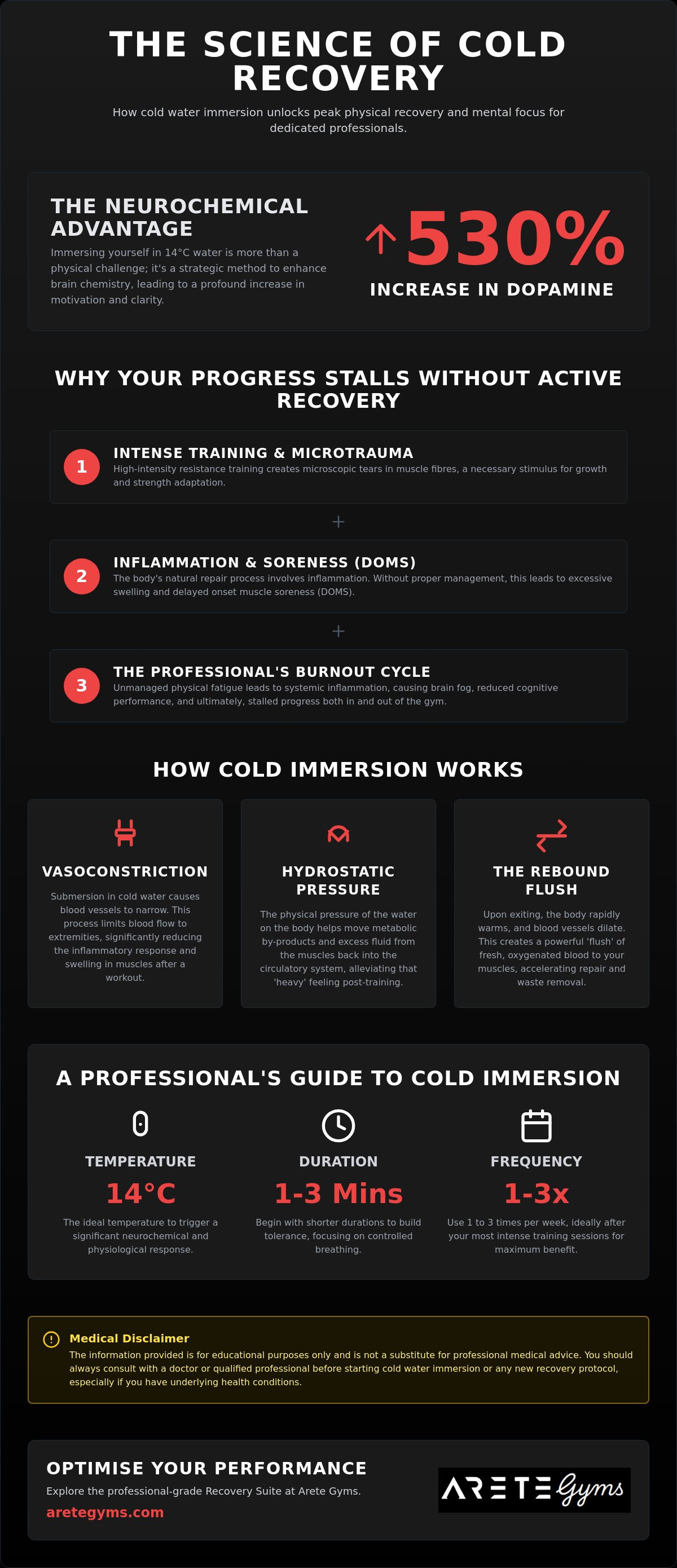
Did you know that immersing yourself in 14°C water can trigger a 530% increase in plasma dopamine concentrations? For the dedicated professional, this isn't merely about enduring the cold; it's a sophisticated method to reclaim your mental focus and physical edge. We've all experienced those mornings where persistent muscle soreness makes focusing on a high-stakes project feel like an uphill struggle. If you've found your progress in the gym stalling due to poor recovery, understanding the science-backed benefits of ice bath for muscle recovery is essential for maintaining your momentum.
Please note that the following information is for educational purposes and is not a substitute for professional medical advice; you should always consult with a doctor or qualified professional before beginning any new recovery protocol. In this article, we'll explore how cold water immersion reduces inflammation and allows you to return to peak training intensity with greater consistency. We'll also examine the specific protocols that help you build mental resilience whilst ensuring your fitness journey remains sustainable alongside a demanding career.
Table of Contents
Why Muscle Recovery is the Secret to Continuous Progression
Progress isn't just about the intensity of your training; it's about what your body does whilst you aren't at the gym. Many high-achieving professionals view rest as a passive state, but in a truly methodical strength and conditioning plan, restoration is an active discipline. When you prioritise the recovery phase, you allow muscle tissue to repair and grow stronger, turning your hard work into tangible results. Without this focus, you're simply breaking the body down without giving it the tools to rebuild.
Medical Disclaimer: The information provided in this article is for educational purposes only and is not a substitute for professional medical advice. You should always consult with a doctor or qualified professional before starting cold water immersion or any new recovery protocol, especially if you have underlying health conditions.
Adopting a "no-ego" approach to fitness means recognising that more isn't always better. If you're constantly fighting through extreme soreness, your training consistency will eventually suffer. Integrating the benefits of ice bath for muscle recovery into your routine helps manage the physical toll of a demanding lifestyle, ensuring your fitness journey is sustainable for the long term.
The Role of Microtrauma in Strength Training
When you engage in intense resistance training, you create microscopic tears in your muscle fibres. This microtrauma is a necessary stimulus, as it triggers the body to repair the tissue to a higher standard than before. Whilst inflammation is a natural part of this growth cycle, excessive swelling can lead to significant discomfort. We define DOMS as the physiological response to unaccustomed eccentric exercise, which often peaks two days after a session. Researching the science behind ice baths reveals how cold exposure can help modulate this inflammatory response, allowing for a faster return to training intensity.
Why Busy Professionals Cannot Afford Poor Recovery
For those balancing a high-pressure career in London, physical fatigue is rarely contained within the gym walls. Systemic inflammation doesn't just affect your squat depth; it can lead to persistent brain fog and decreased cognitive performance during your working day. If your body is stuck in a state of perpetual repair, your mental resilience often takes a hit. By understanding the benefits of ice bath for muscle recovery, you can use cold immersion to "reset" your nervous system. This practice helps you maintain the "sharpness" required for professional excellence whilst ensuring your physical progression never stalls due to avoidable burnout.
The Physiological Benefits of Ice Baths for Muscle Recovery
Medical Disclaimer: The content provided here is for informational purposes only and does not constitute professional medical advice. Always consult with a doctor or qualified health professional before beginning cold water immersion, particularly if you have cardiovascular concerns or other underlying health conditions.
To appreciate the benefits of ice bath for muscle recovery, we must look at how the body responds to extreme thermal stress. When you submerge yourself in cold water, your system initiates immediate vasoconstriction. Your blood vessels narrow significantly as the body prioritises protecting its core temperature. This process is instrumental in managing the "inflammatory cascade" that typically follows a high-intensity lifting session. By restricting blood flow to the extremities, you limit the accumulation of inflammatory markers that contribute to excessive swelling and discomfort.
Research into the physiological mechanisms of ice baths suggests that immersion offers advantages that a simple cold shower cannot match. This is largely due to hydrostatic pressure. When you are fully submerged, the weight of the water applies consistent pressure to your limbs. This pressure assists in moving interstitial fluid back into the circulatory system, which effectively reduces the physical sensation of "heaviness" in the muscles after training. If you're looking to integrate these protocols into your routine, our Recovery Suite Access provides the professional-grade environment needed to optimise these biological responses.
Flushing Metabolic By-products
The true magic happens the moment you exit the water. As your body begins to warm, your blood vessels dilate in a process called vasodilation. This creates a powerful "pump" effect, where fresh, oxygenated blood rushes back into the muscle tissues. This rapid cycling helps flush out metabolic by-products like lactic acid and other toxins that accumulate during strenuous exercise. Your lymphatic system, which lacks its own pump, relies on this external stimulation to move waste products through the body, accelerating your return to peak potential.
Neurological and Hormonal Responses
The benefits of ice bath for muscle recovery extend far beyond the physical tissue. Cold immersion triggers a significant release of norepinephrine, a chemical that acts as both a hormone and a neurotransmitter. Studies have shown that immersion in 14°C water can increase plasma dopamine concentrations by 530%, which explains the profound sense of mental "sharpness" and improved mood many professionals report post-plunge. This hormonal surge helps regulate the autonomic nervous system, moving you from a "fight or flight" state into a parasympathetic state. Over time, this practice improves your overall stress management and can significantly enhance sleep quality, which is the ultimate foundation of any successful body transformation.
Maximising Results with Contrast Therapy: Combining Heat and Cold
Whilst the standalone benefits of ice bath for muscle recovery are significant, many professionals find that a more dynamic approach yields even greater rewards. Contrast therapy is the practice of alternating between the heat of a sauna and the intense cold of an ice bath. This method doesn't just rely on the soothing properties of one temperature; it leverages the extreme transition between the two to stimulate the body's systems in a way that passive rest simply cannot match.
Medical Disclaimer: This content is provided for educational purposes and does not replace professional medical advice. You should always consult with a doctor or qualified health professional before attempting contrast therapy, particularly if you have a history of heart disease, high blood pressure, or other circulatory issues.
The primary advantage of this method is the creation of a "Vascular Pump." By cycling through these temperature extremes, you force your circulatory system to work at a higher efficiency, which is often superior to using ice baths alone for deep tissue restoration. For a more detailed breakdown of these protocols, you can explore The Ultimate Guide to Sauna and Plunge.
The Science of Vasodilation and Vasoconstriction
During the heat phase in a sauna, your blood vessels undergo vasodilation, opening wide to allow blood to flow closer to the skin's surface. Moving immediately into an ice bath triggers rapid vasoconstriction, where those same vessels narrow sharply. This rhythmic "pumping" action acts as a manual driver for circulation, significantly improving the delivery of oxygen and vital nutrients to fatigued muscle groups. Contrast therapy improves circulation efficiency by ensuring that fresh, nutrient-rich blood reaches the deepest layers of tissue whilst metabolic waste is moved out of the system more effectively.
Mental Resilience and the 'No-Ego' Challenge
Mastering contrast therapy requires more than just physical endurance; it demands a high level of mental discipline. Overcoming the psychological barrier of moving from a 90°C sauna into a 10°C plunge pool is a powerful way to build cognitive resilience. In a professional context, the ability to control your breath and maintain composure under the shock of the cold translates directly to staying calm under high-stakes pressure at work. This "no-ego" challenge is often best experienced amongst a supportive community, where shared recovery rituals turn a demanding practice into a source of collective strength and spirit.
By integrating these cycles into your routine, you aren't just chasing a quick fix. You're adopting a methodical, science-backed strategy that reinforces both your physical potential and your mental sharpness for the long term. If you're ready to move forward with your progression, understanding the benefits of ice bath for muscle recovery within a contrast protocol is a vital step toward sustainable high performance.
A Professional’s Guide to Safe Cold Water Immersion
Medical Disclaimer: The content within this article is for educational purposes only and does not constitute professional medical advice. It's essential that you consult with a doctor or qualified health professional before starting cold immersion therapy, particularly if you have a history of cardiovascular issues or respiratory conditions.
Approaching cold water immersion with a methodical mindset ensures that you reap the benefits of ice bath for muscle recovery without compromising your safety. For most professionals, the ideal temperature range for effective restoration lies between 10-15°C. Whilst it might be tempting to chase lower temperatures in the spirit of competition, the "no-ego" approach prioritises consistency and sustainability over extreme discomfort. If the water is too cold, you risk triggering a stress response that counteracts the restorative goals of your session.
Timing your plunge is equally vital. If your primary goal is building muscle size (hypertrophy), research suggests waiting at least 4-6 hours after your strength training session before submerging. This delay ensures the natural inflammatory signals required for muscle growth aren't prematurely suppressed. However, if you're prioritising a fast return to peak training intensity or need to manage acute soreness from high-intensity conditioning, plunging sooner can be highly effective. If you're ready to integrate these expert protocols into your routine, you can book a session at our specialised Recovery Suite.
Duration and Frequency Protocols
If you're new to cold immersion, start with 2-3 minutes to allow your body to adapt. As you build resilience, you can gradually increase this duration to a maximum of 10-12 minutes. It's a common misconception that staying in longer provides more value; in reality, exceeding 15 minutes significantly increases the risk of hypothermia and offers diminishing returns for tissue repair. Regarding frequency, using an ice bath 2-3 times per week is usually sufficient for busy professionals balancing high training volumes with a demanding career.
Safety Precautions and Breathing Techniques
The most challenging part of the plunge is the initial "gasp reflex." You can manage this by focusing on controlled nasal breathing, which helps signal to your nervous system that you're safe. Maintain a steady, rhythmic breath whilst keeping your hands out of the water if the cold becomes too intense. You should exit the water immediately if you experience sharp pain, lightheadedness, or extreme shivering. Once you exit, avoid jumping into a hot shower immediately. Instead, allow your body to warm up naturally through light movement or by wearing warm layers, which encourages your circulatory system to finish the recovery process on its own terms.
Optimising Your Performance at Arete Gyms Aldgate
Knowledge of the science is only the first step; the true advantage comes from practical application within a professional environment. At Arete Gyms, we've designed our facility to bridge the gap between high-intensity training and methodical restoration. For the busy professional working in the City, time is the most significant barrier to consistency. By providing professional-grade recovery tools on-site, we ensure that your physical progression doesn't stall due to the logistical challenges of a demanding schedule.
Medical Disclaimer: The information provided in this article is for educational purposes and is not a substitute for professional medical advice. Always consult with a doctor or qualified health professional before starting cold water immersion or any new fitness protocol, especially if you have underlying health conditions.
Our specialist coaches don't just focus on the weight on the bar. They integrate recovery as a core pillar of your Body Transformation for Busy Professionals in London. By choosing a facility that understands the physiological benefits of ice bath for muscle recovery, you're investing in the longevity of your career and your health. We help you map out exactly when to use our Recovery Suite to ensure your restoration efforts complement your specific training goals whilst maintaining your mental sharpness for the boardroom.
A Specialist Facility in the Heart of London
Located at our Aldgate East facility, our dedicated Recovery Suite offers a sanctuary for those who value quality and precision. We maintain the highest standards of hygiene and equipment quality, ensuring our sauna and ice bath are always ready for your next session. Our "no-ego" philosophy means that these advanced tools are accessible to everyone, from beginners to seasoned athletes. We've removed the intimidation factor, creating a space where you can focus entirely on the work of restoration amongst a supportive community of like-minded professionals.
Take the Next Step in Your Progression
If you're ready to move forward with a more sustainable approach to fitness, the next step is to experience our facility firsthand. You can book a session at Arete Gyms to explore how our Recovery Suite Access can transform your results. Whether you're looking for Small Group Personal Training or Independent Gym Access, our expert mentors are here to guide you. We invite you to visit the gym and speak with a specialist about how we can help you unlock your full potential through a balanced, science-backed approach to movement and wellness. Your journey toward peak performance starts with a single, methodical step.
Elevate Your Recovery Strategy Today
Transforming your approach to restoration is a fundamental step in ensuring your physical progression remains sustainable alongside a demanding career. By understanding the science-backed benefits of ice bath for muscle recovery, you move beyond simple rest and into a methodical routine that prioritises long-term health. Whether you're utilising cold immersion to manage inflammation or adopting contrast therapy to sharpen your mental resilience, the goal is always to maintain your peak potential.
Medical Disclaimer: This content is for educational purposes and isn't a substitute for professional medical advice; you should always consult with a doctor or qualified professional before beginning cold immersion therapy. At Arete Gyms, we provide expert-led recovery protocols within our specialist facility in Aldgate East. You'll join a supportive, no-ego community of professionals dedicated to achieving real results through disciplined training and intentional restoration.
Ready to take the next step in your fitness journey? Book Your Session at Our Aldgate Recovery Suite and discover how our specialised tools can help you return to training with greater intensity and focus. We look forward to backing your progression and helping you achieve the results you've worked so hard for.
Frequently Asked Questions
Medical Disclaimer: The information provided below is for educational purposes only and is not a substitute for professional medical advice. You should always consult with a doctor or qualified health professional before beginning cold water immersion, particularly if you have underlying cardiovascular or respiratory conditions.
How long should I stay in an ice bath for muscle recovery?
You should aim to stay in an ice bath for between 5 and 15 minutes to achieve the best physiological results. Research often points to the "Søberg Protocol," which suggests a total of 11 minutes of cold exposure per week, split into multiple sessions, for optimal metabolic and recovery benefits. If you're a beginner, starting with just 2 minutes allows your body to adapt whilst still providing significant benefits of ice bath for muscle recovery.
Is an ice bath better than a cold shower for DOMS?
Ice baths are generally superior to cold showers for managing Delayed Onset Muscle Soreness (DOMS) due to the effects of hydrostatic pressure and full immersion. Whilst a cold shower can reduce self-reported sick days by 29%, full immersion in an ice bath provides a more consistent temperature and pressure. This combination is more effective at flushing metabolic waste from fatigued tissues and reducing the perceived muscle soreness by 20-30% compared to passive rest.
Should I take an ice bath immediately after weightlifting?
You should wait at least 4 to 6 hours after a weightlifting session if your primary goal is muscle hypertrophy. Cold immersion immediately following resistance training can blunt the natural inflammatory response required for muscle growth. However, if your priority is a faster return to peak training intensity for a competition or a high-intensity conditioning block, taking a plunge sooner can be a pragmatic choice to manage acute fatigue and systemic inflammation.
Can ice baths help with injury prevention?
Ice baths contribute to injury prevention by managing systemic inflammation and improving the quality of your sleep and autonomic regulation. By reducing residual fatigue between sessions, you ensure that your movement patterns remain precise and your central nervous system stays resilient. This methodical approach to restoration helps you avoid the "overreaching" phase that often leads to avoidable strains and helps you maintain a consistent progression in your training.
What is the best temperature for a recovery ice bath?
The ideal temperature range for a recovery ice bath is between 10°C and 15°C (50°F to 59°F). This range is cold enough to trigger beneficial responses like vasoconstriction and the release of norepinephrine without being unnecessarily dangerous. Maintaining this temperature ensures you gain the benefits of ice bath for muscle recovery whilst being able to remain in the water long enough to achieve a genuine therapeutic effect on your muscle tissue.
Are there any risks associated with cold water immersion?
Yes, potential risks include cold shock, hypothermia, and increased cardiovascular strain, which is why professional guidance is essential. It's vital to never plunge alone in open water and to exit the water immediately if you experience chest pain, severe shortness of breath, or confusion. Always ensure you are in a controlled environment, such as our specialist facility, where temperature and safety protocols are strictly managed by expert mentors.
Does an ice bath help with fat loss or body transformation?
Cold immersion can increase your metabolism by up to 250%, which provides a supportive boost to your broader body transformation goals. Whilst it shouldn't be viewed as a primary method for weight loss, the improvements in insulin sensitivity and the activation of brown adipose tissue contribute to a healthier metabolic profile. The real value lies in the improved recovery, which allows you to maintain the high training intensity required for body composition changes.
How often a week can I safely use the recovery suite?
Most professionals find that using the recovery suite 2 to 3 times per week is sufficient to manage the demands of a high-performance lifestyle. This frequency allows you to reap the rewards of cold and heat therapy without over-stressing your nervous system. If you are in a period of particularly high training volume or preparing for a specific physical challenge, you might increase this frequency under the guidance of our specialist coaches to ensure long-term sustainability.