
'Recovery Suite' Definition: The Science of Performance Restoration in 2026

Updated: 4 days ago
What if the most vital part of your training programme isn't the heavy lifting, but the deliberate moments of restoration that follow? For many dedicated professionals, the "recovery suite" definition has evolved from a luxury spa concept into a necessary, science-led environment designed to reverse the physical toll of high-intensity training. You've likely felt the frustration of persistent muscle soreness affecting your focus at work or a frustrating plateau in your strength progress. It's common to feel overwhelmed by contradictory biohacking advice whilst trying to maintain a demanding career and a consistent fitness routine.
This article promises to clarify what a modern recovery suite actually entails and how these protocols can accelerate muscle repair and improve mental clarity. We'll examine how integrating specialised tools like saunas and ice baths into your routine creates a sustainable path for long-term progression. This content is for informational purposes only and is not professional medical advice; always consult with a doctor before beginning new recovery protocols. By the end, you'll understand why expert-led restoration is the essential closing bracket for every successful workout, ensuring you return to both the gym and the office with renewed potential.
Table of Contents
What is a Recovery Suite? Defining the Modern Performance Standard
A "recovery suite" definition is a dedicated space housing specialist tools for physiological restoration. It's no longer just an optional extra for elite athletes; it has become the standard for any high-level performance centre in 2026. This environment is specifically designed to facilitate the biological repair process after intense physical exertion. This content is for informational purposes only and is not professional medical advice. Always consult with a doctor before beginning new recovery protocols.
The rise of these suites reflects a shift in how we view fitness. We've moved beyond the "more is better" mentality. We now understand that progression happens during the gaps between training sessions. By applying principles from sports medicine, these spaces provide the precise conditions needed for the body to rebuild itself stronger than before. It's a methodical approach to wellness that prioritises long-term health over short-term vanity.
Restoration vs. Relaxation: The Core Philosophy
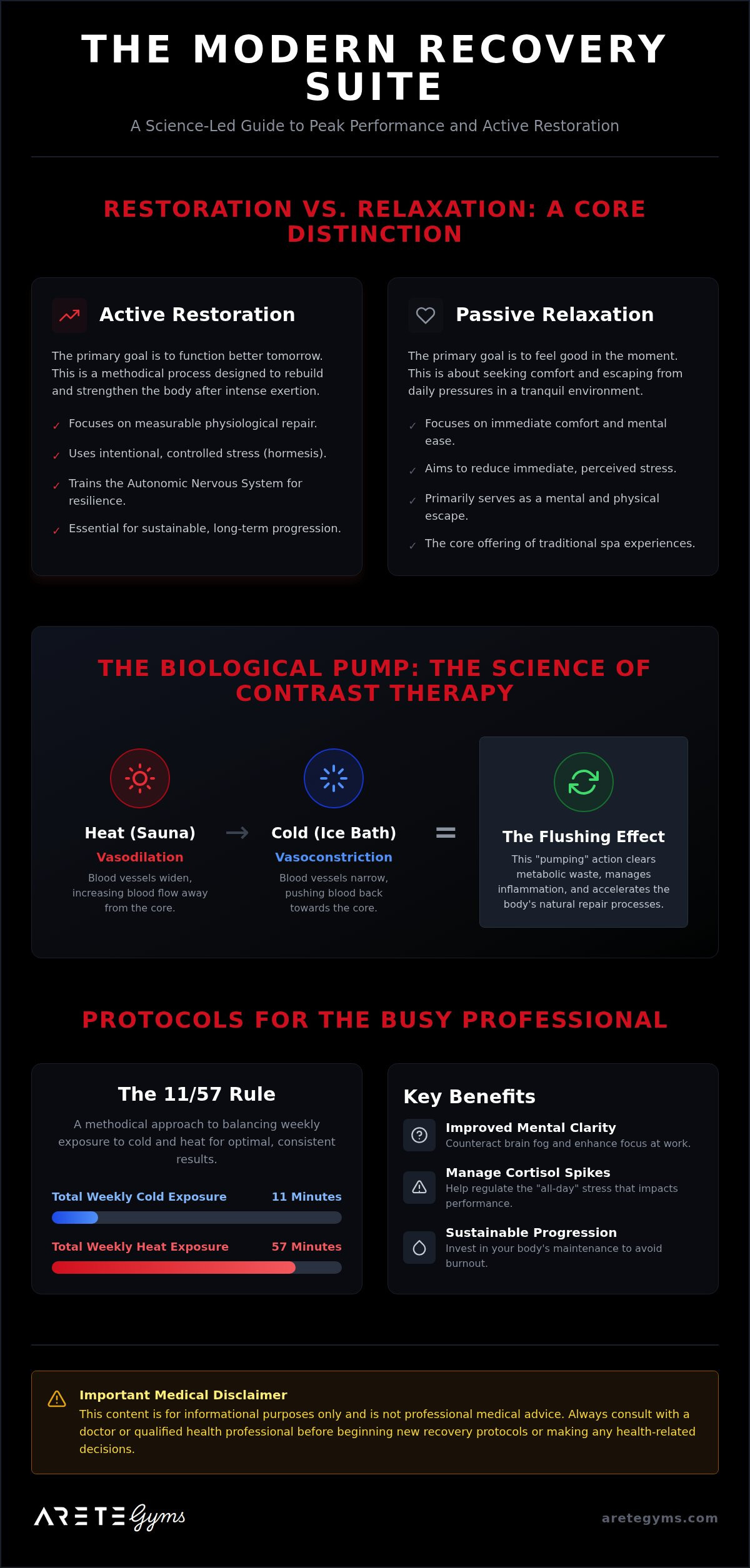
It's easy to confuse a recovery suite with a traditional spa, but their objectives are fundamentally different. A spa is built for passive relaxation, where the goal is simply to feel good in the moment. A recovery suite focuses on active restoration, where the goal is to function better tomorrow. You're not just escaping the world; you're preparing to re-enter it with more capacity.
This process works by targeting the Autonomic Nervous System (ANS). Most professionals spend their workdays in a state of high sympathetic arousal. A suite uses intentional stress, known as hormesis, to force the body to adapt. When you alternate between a high-spec sauna and an ice bath, you're training your nervous system to switch gears more efficiently. This isn't just about comfort; it's about biological efficiency and resilience.
Why Busy Professionals are Prioritising Recovery in 2026
In the high-pressure environment of the City, mental clarity is as valuable as physical strength. There's a direct link between physical recovery and cognitive performance. If your body is stuck in a cycle of chronic inflammation and high cortisol, your work focus will inevitably suffer. Controlled recovery sessions help manage the "all-day" cortisol spike that many Aldgate professionals experience.
Sustainability is the key to a long-term training routine. Many people plateau because they treat their bodies like a machine that never needs maintenance. Integrating a sauna and ice bath into your weekly schedule ensures that your physical progression doesn't come at the cost of your mental well-being. It's the professional way to ensure you can keep putting the work in year after year without burning out. By treating recovery as a discipline, you're investing in your future performance both in the gym and the office.
The Biological Mechanism: How Recovery Suites Rebuild the Body
Understanding the "recovery suite" definition requires a look at the fluid dynamics of the human body. At its core, a professional suite acts as a mechanical pump for your vascular and lymphatic systems. This content is for informational purposes only and is not professional medical advice. Always consult with a doctor before beginning new recovery protocols. When you subject the body to controlled temperature changes, you're essentially forcing blood to move in a way that passive rest cannot replicate.
Intense training creates necessary micro-trauma and acute inflammation, which is the "good" stress required for muscle growth. However, if this inflammation becomes chronic, it leads to the plateaus and persistent soreness that many professionals struggle with. Vasoconstriction is the narrowing of blood vessels caused by the contraction of muscular vessel walls, a physiological response to cold that redirects blood flow toward the core to protect vital organs. By following this with heat-induced vasodilation, you create a powerful flushing effect that clears metabolic waste and by-products of exercise from your tissues.
The Science of Contrast Therapy
Contrast therapy is the methodical alternation between heat and cold, a cornerstone of modern recovery protocols. This process triggers the "Vascular Shunt" effect, where blood is rapidly moved from the extremities to the core and back again. This isn't just about circulation; it's a vital workout for your lymphatic system. Unlike the circulatory system, the lymphatic system has no central pump. It relies on movement and pressure changes to move toxins out of the body, making the recovery suite an essential tool for deep cellular clearance.
Neurological Benefits: Beyond the Muscle
The impact of a recovery suite extends far beyond physical tissue repair. Cold water immersion triggers a significant release of norepinephrine, a chemical that dramatically improves mood, focus, and alertness for the following workday. This helps facilitate a "parasympathetic shift," moving your nervous system from the high-stress "fight or flight" mode into the "rest and digest" state necessary for true healing. Furthermore, the deliberate manipulation of your core temperature helps regulate your circadian rhythm, often leading to deeper and more restorative sleep. If you're ready to experience these benefits firsthand, integrating these sessions into your weekly routine can transform your long-term progression.
Essential Components: Sauna, Ice Bath, and Specialist Tools
A comprehensive "recovery suite" definition refers to more than just a room with a shower; it's a curated ecosystem of hardware designed to trigger specific biological responses. Whilst many people attempt to replicate these effects at home, the precision of professional-grade equipment is what separates a casual cool-down from a performance-optimisation session. Always consult with a doctor before beginning new recovery protocols.
To achieve the continuous progression required in a professional lifestyle, you need access to specialist sauna and ice bath facilities. These core elements are often supported by ancillary tools such as compression boots for lymphatic drainage, percussion therapy devices for targeted tissue work, and dedicated hydration stations to replace lost minerals. This combination ensures that every aspect of the restoration process is addressed in a single, methodical rotation.
Heat Exposure: The Sauna Protocol
For those seeking to maximise the neurological benefits of their downtime, sensory deprivation is an increasingly popular addition to the restoration process. Specialist facilities like City Cave Carnegie provide a controlled environment to eliminate external stimuli, which can significantly enhance the parasympathetic shift required for deep recovery.
In a modern suite, you'll often choose between traditional and infrared saunas. Traditional saunas use high ambient temperatures to heat the air around you, creating a strong cardiovascular response that mimics light aerobic exercise. Infrared saunas use light waves to penetrate the skin and heat the body directly at lower temperatures, which some find more comfortable for longer sessions. Both methods trigger the release of Heat Shock Proteins (HSPs). These proteins act as cellular chaperones, repairing damaged structures and improving the body's resilience to future stress. Regular heat exposure has also been shown to support a healthy growth hormone response, which is vital for tissue repair and long-term vitality. For those looking to support their physical restoration with high-quality supplements and fitness tools, check out Nutrihub Store.
Whilst a cold shower is a good starting point, it lacks the hydrostatic pressure and temperature consistency of a dedicated ice bath. Professional units maintain a "Goldilocks" zone between 3°C and 10°C, ensuring the cold shock is intense enough to be effective without being dangerous. Managing this response through controlled breathwork is a discipline in itself, helping to calm the nervous system whilst the body adapts. This level of cold exposure is essential for brown fat activation, a type of metabolic tissue that burns energy to produce heat. By regularly challenging your thermoregulation, you improve your metabolic health and build a level of mental fortitude that carries over into your professional life.
Organising Your Session: Protocols for Continuous Progression
A 60-minute session in a recovery suite should be as organised as your gym floor routine. Whilst many people wander between tools without a plan, a methodical approach ensures you hit the necessary physiological markers for repair. In our "recovery suite" definition, we view this time as the essential counterpart to high-intensity work. Always consult with a doctor before beginning new recovery protocols.
Effective restoration requires a weekly commitment to specific durations. The 11/57 Rule provides a clear target: aim for 11 minutes of total cold immersion and 57 minutes of heat exposure each week. This isn't about completing the entire quota in a single afternoon. Spreading these minutes across two or three sessions creates a steady rhythm of restoration that supports your long-term potential. This synergy is particularly effective when paired with Small Group Personal Training, as it allows your body to process the training stimulus whilst minimising the risk of burnout.
The Contrast Protocol: Timing and Ratios
A standard rotation typically involves 15 minutes in the sauna followed by 2 to 3 minutes in the ice bath. Repeating this cycle three times within an hour provides a complete physiological reset. This ratio forces the vascular system to contract and dilate repeatedly, which clears metabolic by-products more efficiently than passive rest. Ending on a final cold plunge is often recommended for busy professionals heading straight back to the office. The resulting surge in norepinephrine provides a sharp boost in mental alertness and focus, making it an ideal tool for maintaining cognitive performance during a demanding workday.
Common Recovery Mistakes to Avoid
One frequent error is plunging immediately after a session focused on muscle growth. Cold exposure can have a "blunting" effect on the acute inflammatory response needed for hypertrophy. If your goal is maximum strength or size, it's often better to wait at least four hours after training before using the ice bath. You should also be mindful of hydration and electrolyte replacement, as heat exposure significantly increases fluid loss and can lead to fatigue if neglected. Always listen to your body's signals; if you're feeling particularly depleted, choosing a heat-only session may be more beneficial than forcing a contrast cycle. If you're ready to build a more resilient version of yourself, you can start your progression today by integrating these professional protocols into your routine.
Elevating Your Training at Arete Gyms’ Aldgate Recovery Suite
Located in the heart of East London, Arete Gyms provides a professional sanctuary for those who realise that training is only half the battle. Our "recovery suite" definition centres on providing a high-spec, no-ego environment where Aldgate professionals can reset after a demanding day. This isn't just about luxury; it's about creating a pragmatic space for body transformation. Always consult with a doctor before beginning new recovery protocols.
By integrating our specialist suite into your Small Group Personal Training schedule, you ensure that every ounce of effort on the gym floor is backed by a science-led restoration protocol. Our Aldgate East location is specifically designed to fit into a high-performing lifestyle, offering the efficiency and expert-led coaching that busy careers demand. We've removed the intimidation of the traditional gym, replacing it with a methodical approach to wellness that prioritises long-term sustainability.
A Supportive Community of High Performers
The recovery area at Arete acts as a vital "social glue" for our community. Recovering amongst like-minded professionals who share similar goals and time constraints creates an atmosphere of collective progression. It's a space where you can decompress and share insights without the intimidation often found in traditional gym settings. This supportive environment is a key pillar of our Body Transformation for Busy Professionals in London guide, which emphasises long-term sustainability over quick fixes. When you see others committing to their restoration with the same discipline as their lifting, it reinforces the value of the work you're putting in.
Your Next Steps: Booking and Integration
Taking the first step towards a more resilient routine is straightforward. You can Book Sauna and Ice Bath sessions directly through our platform to secure your slot. For a seamless experience, we recommend bringing appropriate swimwear and a reusable water bottle to stay hydrated during your rotation. We provide the high-spec environment; you simply need to show up and follow the protocol.
If you're looking for a complete training solution, we also offer independent gym access to complement your recovery sessions. We invite you to visit our Main Gym to see our facilities first-hand and understand how our specialist equipment can support your continuous physical progression. By treating restoration as a necessary tool for professional performance, you'll find that your results in the gym translate directly to better focus and energy in the office.
Mastering Your Restoration Strategy
Integrating a professional restoration space into your routine is about more than just comfort; it's a strategic investment in your biological potential. By understanding the modern "recovery suite" definition, you move from passive rest to active physiological repair. We've explored how contrast therapy flushes metabolic waste and how the 11/57 rule provides a methodical framework for long-term progression. These protocols are essential for busy professionals in Aldgate East who need to maintain high cognitive focus whilst pursuing ambitious physical goals. Always consult with a doctor before beginning new recovery protocols.
Your journey toward body transformation doesn't end when you leave the gym floor. By prioritising expert-led restoration, you're ensuring that every session builds a stronger, more resilient version of yourself. We look forward to supporting your continuous improvement in our no-ego sanctuary. Ready to optimise your progression? Book your Aldgate Recovery Suite session now. Take the next step in your training with the support of specialist sauna and ice bath facilities designed for your professional lifestyle.
Frequently Asked Questions
What is a recovery suite in a gym environment?
A recovery suite is a dedicated environment designed to accelerate the body's repair process through science-backed protocols. In our "recovery suite" definition, this includes access to high-spec tools like saunas and ice baths that target the nervous system and vascular health. This content is for informational purposes only and is not professional medical advice; you should always consult with a doctor before beginning new recovery protocols. These facilities are essential for maintaining continuous physical progression.
Is a recovery suite different from a traditional spa?
A recovery suite differs from a traditional spa by prioritising physiological function over purely passive relaxation. Whilst a spa aims for immediate comfort, a suite at Arete Gyms in Aldgate East is a performance-led space. It uses intentional stress, such as contrast therapy, to improve your resilience and long-term wellness. It's designed to help busy professionals integrate fitness into a demanding lifestyle without the ego of a standard gym environment.
How often should I use a recovery suite for best results?
Most members find that two to three sessions per week provide the best results for muscle repair and mental clarity. This frequency allows you to hit the recommended 11 minutes of cold immersion and 57 minutes of heat exposure without overwhelming your schedule. Consistency is the key to seeing a real impact on your training routine. This content is for informational purposes only and is not professional medical advice; consult a doctor before starting any new routine.
Can I use the sauna and ice bath on the same day as my workout?
You can certainly use the sauna and ice bath on the same day as your workout, as they act as the perfect "closing bracket" to a session. If your goal is maximum muscle growth, we suggest waiting at least four hours after a strength session before using the ice bath. This prevents the cold from blunting the natural inflammatory response needed for hypertrophy. It's a methodical way to ensure your restoration doesn't hinder your gains.
What should I wear for a recovery suite session?
We recommend wearing clean swimwear and bringing a reusable water bottle to stay hydrated throughout your rotation. Since our Aldgate East facility focuses on a professional and pragmatic experience, you don't need anything complex. We provide the specialist environment, whilst you bring the discipline to follow the protocols. This simple setup ensures your transition from the gym floor to the recovery suite is seamless and efficient during a busy workday.
Are there any health risks associated with contrast therapy?
Contrast therapy is generally safe for healthy individuals, but it does place specific demands on the cardiovascular system. Always consult with a doctor or qualified professional before making decisions about new health protocols, especially if you have pre-existing conditions. Our expert-led approach ensures you use the facilities in a way that supports your body transformation safely and effectively.
How long does a typical recovery suite session take?
A standard session typically takes 60 minutes, which allows for three full rotations of heat and cold. This duration ensures you have enough time in the sauna to trigger heat shock proteins and sufficient time in the ice bath for effective vasoconstriction. It's a manageable timeframe for professionals working near Liverpool Street or Aldgate, making it easy to fit into a lunch break or a post-work routine.
Why is contrast therapy better than just a hot shower?
Contrast therapy is superior to a hot shower because it provides precise temperature control and hydrostatic pressure that a shower cannot match. The immersion in an ice bath triggers a more powerful "vascular shunt" effect, moving blood more effectively between your core and extremities. This process clears metabolic waste and reduces chronic swelling much faster than a standard cool-down. It's the professional choice for those serious about their physical progression.


Comments